

Why Does Power Electronic Wire Use Stranded Copper Instead Of Solid Copper?
Paidu Group's Power Electronic Wire is often discussed in industrial electrical design when engineers compare stranded copper and solid copper conductors for modern power systems, especially in environments where vibration, heat, and electromagnetic noise constantly interact. The choice between the two is not just a material preference but a response to real operating challenges in today's electrical infrastructure.
The company Paidu Group Limited has built long-term technical experience in cable structure optimization and insulation testing, which helps explain why a stranded copper design is widely adopted in a Electronic Wire used across automation and energy transmission systems.
Understanding the Core Question: Why Stranded Copper?
At first glance, solid copper seems simpler: one continuous metal core, easy to manufacture and stable in shape. However, modern electrical environments are far from simple. Equipment is no longer static, and electrical loads fluctuate constantly.
Stranded copper consists of multiple fine copper wires twisted together, and this structure changes how current, heat, and mechanical stress behave inside the cable.
The key idea:
Instead of focusing only on conductivity, engineers consider:
- Mechanical flexibility
- Thermal stability
- Fatigue resistance
- Signal integrity under interference
These factors are critical in a Power Electronic Wire used in industrial systems.
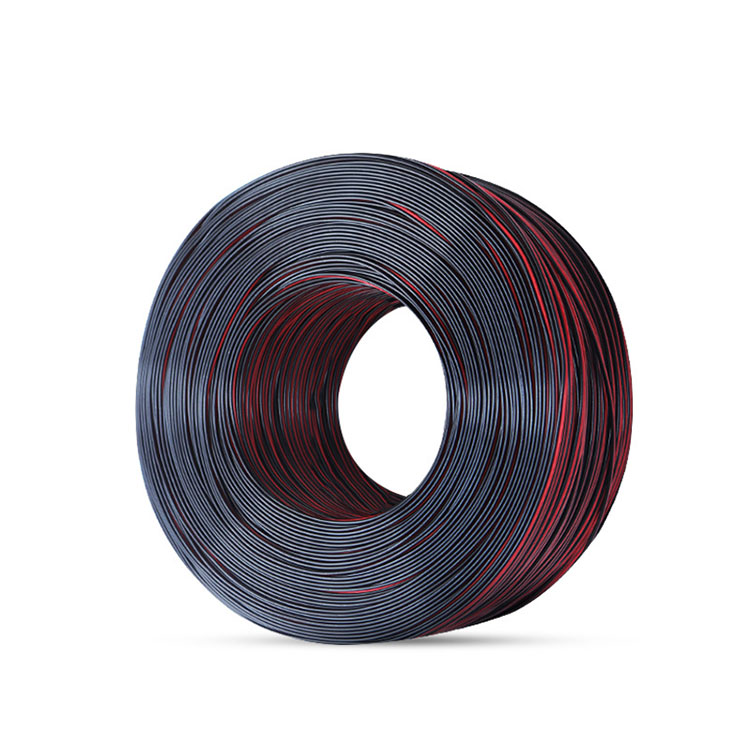
Mechanical Flexibility: The Most Visible Advantage
One of the most immediate differences between stranded and solid copper is flexibility.
Why flexibility matters in real installations
Modern electrical systems often involve:
- Tight cable routing in control cabinets
- Moving machinery arms
- Vibrating industrial platforms
- Complex conduit paths
Solid copper tends to resist bending and may develop stress points over time. Stranded copper, however, distributes bending stress across many small wires, reducing the risk of breakage.
Simple comparison table
| Feature | Stranded Copper | Solid Copper |
| Flexibility | High | Low |
| Vibration resistance | Strong | Moderate |
| Installation ease | Easier routing | Limited shaping |
| Fatigue resistance | Better long-term | More prone to cracking |
This is one of the main reasons stranded conductors are widely used in its systems operating in dynamic environments.
Electrical Performance Under Real Conditions
A common misconception is that stranded copper has lower conductivity. In reality, when properly designed, the difference is minimal in practical applications.
What matters more is how the cable behaves under load changes.
Key electrical considerations:
- Skin effect at higher frequencies
- Heat dissipation consistency
- Contact resistance at termination points
Stranded copper helps reduce localized heating by allowing slight movement between strands, which improves thermal balance during continuous operation.
Electromagnetic Interference and Shielding Behavior
Industrial environments are filled with electromagnetic noise from motors, inverters, and switching devices. A Power Electronic Wire often includes shielding layers, but the conductor structure itself also plays a role.
Stranded copper helps:
- Reduce micro-vibration interference
- Improve signal stability in control circuits
- Maintain consistent impedance in variable loads
In environments like automation lines or frequency-controlled systems, this stability becomes important for long-term reliability.
Thermal Stress and Heat Distribution
Heat is one of the most critical factors in cable lifespan.
Stranded copper provides:
- Larger surface area for heat dispersion
- Reduced hotspot formation
- More uniform thermal expansion
Field-style observation
In systems where cables are exposed to continuous current fluctuations, solid copper tends to concentrate heat at bending or connection points. Stranded copper distributes that stress more evenly, reducing localized degradation.
Why Solid Copper Still Exists
It is important not to assume stranded copper is always the better option. Solid copper still has advantages in certain cases:
- Fixed indoor wiring
- Short-distance connections
- Low-vibration environments
However, when systems involve movement, vibration, or thermal cycling, stranded copper becomes more practical for a Electronic Wire.
Structural Behavior Under Stress
To better understand the difference, it helps to look at how each conductor reacts under repeated mechanical stress.
Stress response overview
| Condition | Stranded Copper Behavior | Solid Copper Behavior |
| Repeated bending | Energy distributed across strands | Stress concentrates in core |
| Vibration exposure | Dampened movement | Direct transfer of force |
| Long-term fatigue | Slower degradation | Faster crack formation |
This structural advantage is one of the main reasons stranded copper dominates in industrial-grade cable design.
Role of Insulation and Shielding in Modern Cable Design
Conductor choice is only one part of the system. The surrounding insulation and shielding are equally important.
Modern Power Electronic Wire designs often include:
- Cross-linked polyethylene insulation
- PVC protective layers
- Shielding layers for electromagnetic protection
- Flame-retardant outer jackets
These layers work together to support stable operation in harsh environments.
The production and testing capabilities of Paidu Group Limited include high-voltage partial discharge testing systems, which help evaluate whether conductor-insulation combinations can maintain long-term stability under electrical stress.
Durability in Harsh Operating Environments
Industrial environments are rarely clean or stable. Cables may be exposed to:
- Oil mist
- Moisture
- High ambient temperature
- Mechanical abrasion
- Continuous vibration
Stranded copper performs better under these mixed conditions because its internal structure adapts slightly under stress instead of resisting it rigidly.
Practical Application Scenarios
Scenario 1: Industrial automation systems
Robotic arms and moving conveyors require constant cable flexing. Stranded copper ensures the Power Electronic Wire maintains continuity without fatigue failure.
Scenario 2: Power distribution in machinery
Machines with frequent start-stop cycles create thermal and electrical fluctuations. Stranded copper helps stabilize these variations.
Scenario 3: Variable frequency drives
High-frequency switching environments benefit from improved thermal and electromagnetic behavior, where stranded copper contributes to more stable performance.
Table: Why Stranded Copper Is Preferred in Dynamic Systems
| Factor | Impact on System | Result |
| Flexing motion | Frequent bending stress | Reduced risk of breakage |
| Heat cycles | Expansion and contraction | More stable lifespan |
| Electrical variation | Load fluctuations | Improved stability |
| Vibration | Mechanical fatigue | Longer service life |
Testing and Quality Validation Perspective
Modern cable systems rely heavily on testing before deployment. For stranded copper designs, validation includes:
- Conductor resistance consistency checks
- High-voltage withstand testing
- Insulation aging simulation
- Shielding effectiveness measurement
At facilities associated with Paidu Group Limited, high-voltage shielding halls and partial discharge testing equipment are used to simulate long-term electrical stress conditions. This helps confirm that a Power Electronic Wire maintains stable performance across different operational scenarios.
Common Misunderstandings
"Stranded copper is weaker electrically"
In practical industrial use, properly manufactured stranded copper performs almost the same electrically as solid copper, especially in low and medium frequency applications.
"Solid copper is always more efficient"
Efficiency depends on system conditions. In dynamic environments, mechanical failure risk outweighs minor conductivity differences.
Design Insight: Choosing Based on System Behavior
The decision is not about which material is superior in isolation, but how the cable behaves in a real system:
- Static systems favor simplicity
- Dynamic systems favor flexibility
- High-stress environments favor fatigue resistance
Stranded copper aligns more closely with modern industrial demands where motion and electrical variation are constant.
Conclusion
The preference for stranded copper in a Power Electronic Wire comes from its ability to balance flexibility, thermal stability, and mechanical endurance under real operating conditions rather than laboratory assumptions. With advanced insulation design and rigorous testing systems, solutions developed under Paidu Group Limited demonstrate how conductor structure and system reliability are closely connected in modern electrical infrastructure.
Send Inquiry



X
We use cookies to offer you a better browsing experience, analyze site traffic and personalize content. By using this site, you agree to our use of cookies.
Privacy Policy