

Why Do Power Companies Use Aluminum Core Power Cables Instead Of Copper?
In modern electrical infrastructure discussions, Aluminum Core Power Cable has become a recurring topic, especially when engineers compare cost efficiency, weight performance, and long-distance transmission behavior. Paidu provides High quality Aluminum Core Power Cable offered by China manufacturer Paidu Group Limited, and this material choice is increasingly associated with large-scale energy distribution planning rather than small-scale wiring logic.
At first glance, copper seems like the obvious choice due to its higher conductivity. However, real-world power networks operate under very different constraints, where scale, weight, installation environment, and long-term maintenance often matter as much as electrical performance.
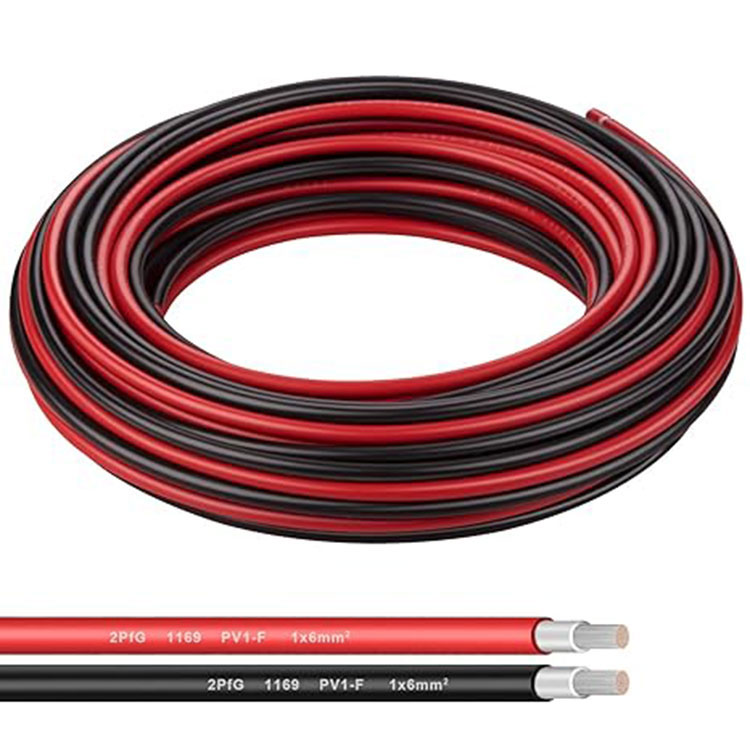
The Real Question Behind Material Choice
When discussing Aluminum Core Power Cable, the core issue is not simply "which conducts better," but "which performs more efficiently across kilometers of infrastructure."
Power systems must balance:
- Transmission distance
- Mechanical load on towers and supports
- Installation cost per kilometer
- Environmental resistance
- Maintenance frequency
Aluminum becomes relevant because it changes the structural and economic equation of power delivery.
Why Aluminum Is Widely Used in Large Power Networks
Aluminum has lower conductivity than copper, but it offers a critical advantage: weight.
Key advantage comparison
| Property | Aluminum Core Cable | Copper Cable |
| Conductivity | Lower | Higher |
| Weight | Much lighter | Heavier |
| Cost per km | Lower | Higher |
| Installation load | Reduced structural stress | Higher structural demand |
| Long-distance use | Highly suitable | Less economical |
This balance is the main reason aluminum dominates overhead and long-distance grid applications.
Weight Matters More Than It Seems
In large transmission systems, cables are not just electrical components—they are structural loads.
Heavier copper lines require:
- Stronger transmission towers
- Higher installation support costs
- Increased mechanical tension control
Aluminum reduces this burden significantly, allowing longer spans between support structures.
Thermal and Environmental Behavior
Aluminum also performs differently under thermal expansion conditions. In outdoor environments where temperature shifts can be extreme, materials expand and contract continuously.
Aluminum's behavior:
- Lower density reduces mechanical stress
- More flexible load distribution over long spans
- Stable performance in overhead exposure
This makes Aluminum Core Power Cable suitable for wide geographic deployment.
Why Copper Is Still Used in Smaller Systems
Copper still plays an important role in localized electrical systems due to:
- Higher conductivity
- Better performance in compact spaces
- Superior terminal connection stability
However, when systems scale up to regional or national grids, aluminum's structural advantages often outweigh copper's conductivity benefits.
Connection With Solar and Low-Voltage Systems
Interestingly, aluminum-based infrastructure is sometimes compared with copper-based photovoltaic wiring systems.
In solar applications, cables must handle:
- UV exposure
- Wide temperature range (-40°C to 120°C)
- Moisture and chemical resistance
- DC voltage up to 1500V
While solar wiring typically uses copper strands for flexibility, aluminum core systems are more commonly associated with transmission-level distribution rather than panel-level wiring.
For example, solar system wiring described in Paidu's cable solutions often uses stranded conductors for flexibility and durability, while Aluminum Core Power Cable focuses on long-distance energy transport.
Material Structure and Performance Trade-offs
Simplified behavior comparison
| Factor | Aluminum Core Cable | Copper Core Cable |
| Electrical loss | Slightly higher | Lower |
| Mechanical weight | Low | High |
| Installation ease | Easier in long spans | More labor-intensive |
| Corrosion sensitivity | Requires protection layers | More stable naturally |
| System efficiency focus | Infrastructure scale | Device-level efficiency |
This shows why the selection depends heavily on application scale.
Engineering Perspective: Why Trade-offs Are Acceptable
In power transmission, small efficiency losses in conductivity can be offset by:
- Reduced structural engineering cost
- Lower support infrastructure requirements
- Easier logistics and installation
- Longer span capability between towers
This is why Aluminum Core Power Cable remains a standard solution in many grid systems.
Protection Layers and Durability Design
Modern aluminum core designs often include protective insulation systems to improve durability:
- PVC sheath for moisture and wear resistance
- UV-resistant outer layers for outdoor exposure
- Chemical resistance coatings for harsh environments
- Multi-layer insulation for electrical safety
These improvements allow aluminum cables to operate reliably in real-world conditions rather than controlled environments.
Role in Modern Energy Infrastructure
Today's energy systems are evolving toward:
- Large-scale renewable integration
- Long-distance electricity transmission
- Hybrid grid structures combining solar, wind, and conventional sources
In this context, aluminum's lightweight structure becomes increasingly important for scalable deployment.
Installation Efficiency in Large Projects
Aluminum cables also simplify logistics:
- Easier transport due to lower weight
- Faster installation over long distances
- Reduced mechanical fatigue for installation equipment
- Lower structural reinforcement needs
These practical advantages directly influence infrastructure planning decisions.
Material Behavior Under Stress
Over time, electrical cables experience:
- Thermal cycling
- Wind-induced vibration
- Mechanical tension changes
- Environmental corrosion exposure
Aluminum's ductile structure allows it to distribute stress differently than copper, reducing certain types of mechanical fatigue in overhead installations.
Why Hybrid Thinking Is Becoming Common
Modern engineering rarely treats materials as "either-or." Instead, systems are designed using hybrid logic:
- Copper for high-efficiency short-distance circuits
- Aluminum for long-distance transmission
- Specialized insulation systems for environmental protection
This layered approach improves overall system balance.
Conclusion
The preference for Aluminum Core Power Cable in large-scale electrical systems is driven less by conductivity and more by structural efficiency, installation economics, and long-distance performance behavior. While copper remains essential in localized and precision electrical applications, aluminum continues to support the backbone of modern power transmission networks. Within this evolving landscape, Paidu Group Limited demonstrates how material selection aligns with real infrastructure demands rather than theoretical electrical performance alone, especially in cable systems designed for complex energy environments.
Send Inquiry



X
We use cookies to offer you a better browsing experience, analyze site traffic and personalize content. By using this site, you agree to our use of cookies.
Privacy Policy