


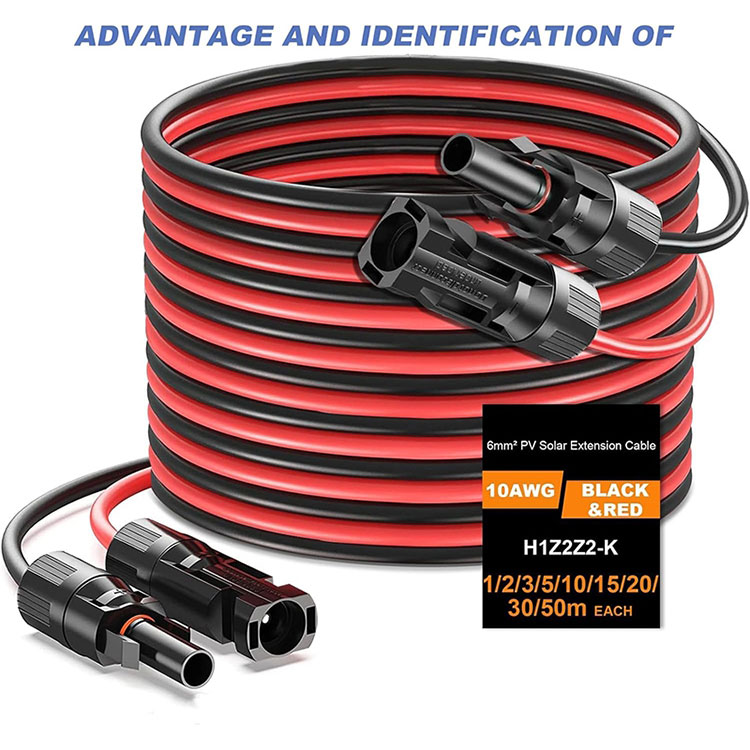
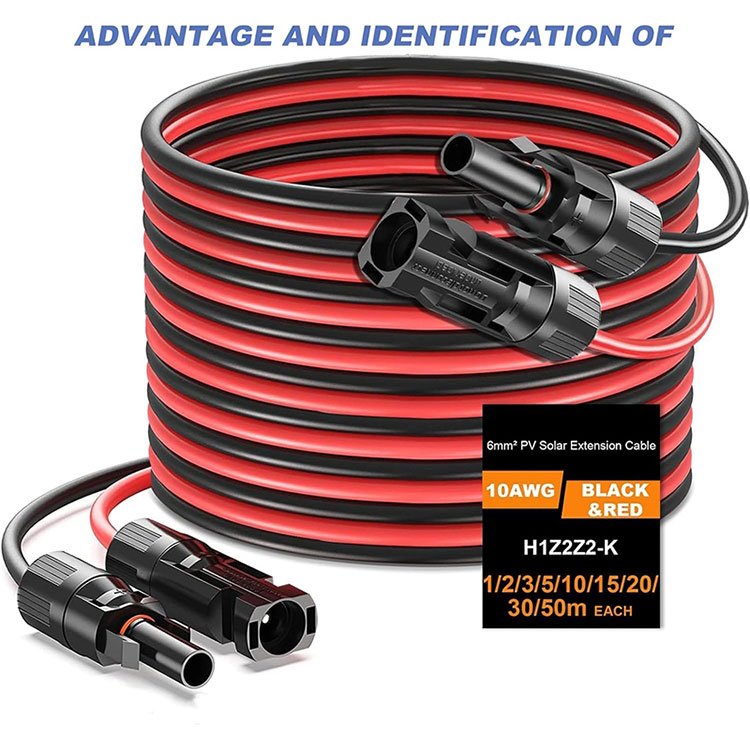
50 Feet 10AWG Extension Cord for Ground Mounted PV System
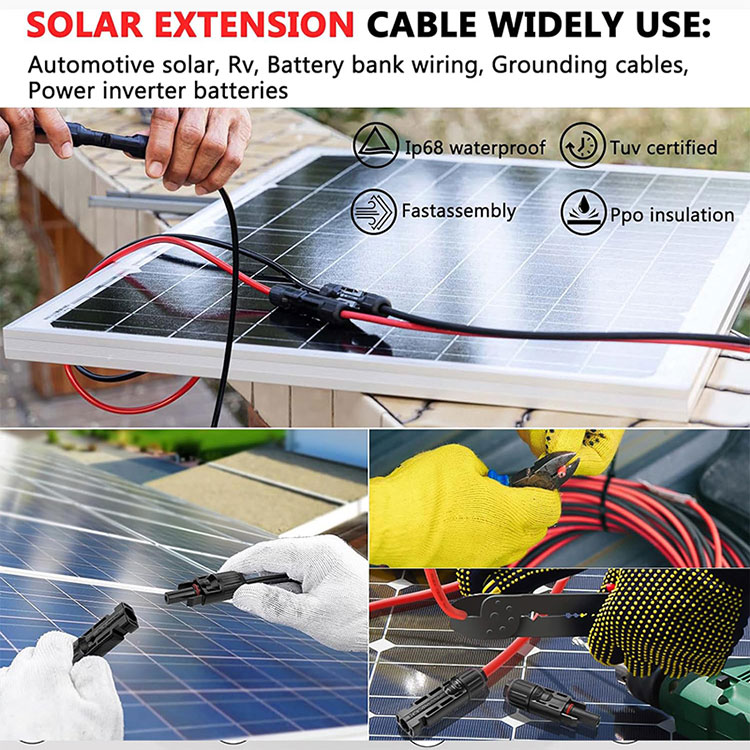
Paido 50 Feet 10AWG Extension Cord for Ground Mounted PV System, factory direct export from China, delivers heavy-duty wiring tailored for open-air solar farms. Its wear-resistant outer jacket, IP68 sealed structure and low-resistance tinned copper wire maintain steady power delivery over long PV wiring runs.
Send Inquiry
Product Description
As the professional manufacturer, 50 Feet 10AWG Extension Cord for Ground Mounted PV System is fully produced, supplied and shipped globally by Paido. This field-tested PV extension cord is custom-built for large utility and commercial ground solar arrays exposed to all outdoor weather conditions.
Designed for Open-Field Ground-Mounted Solar Infrastructure
Unlike rooftop wiring systems, ground-mounted PV installations operate in fully exposed environments with no structural shielding. The Extension Cord for Ground Mounted PV System is developed to handle continuous environmental stress including wind pressure, soil movement, and surface abrasion from metallic mounting structures.
Key design expectations in field deployment:
- Direct exposure to UV radiation without degradation
- Continuous wind-induced cable movement
- Contact with steel racking edges and mounting frames
- Long-distance DC transmission stability (50Ft segment standardization)
This makes the 50 Feet 10AWG Extension Cord a preferred option for EPC contractors seeking predictable performance in large-scale PV farms.
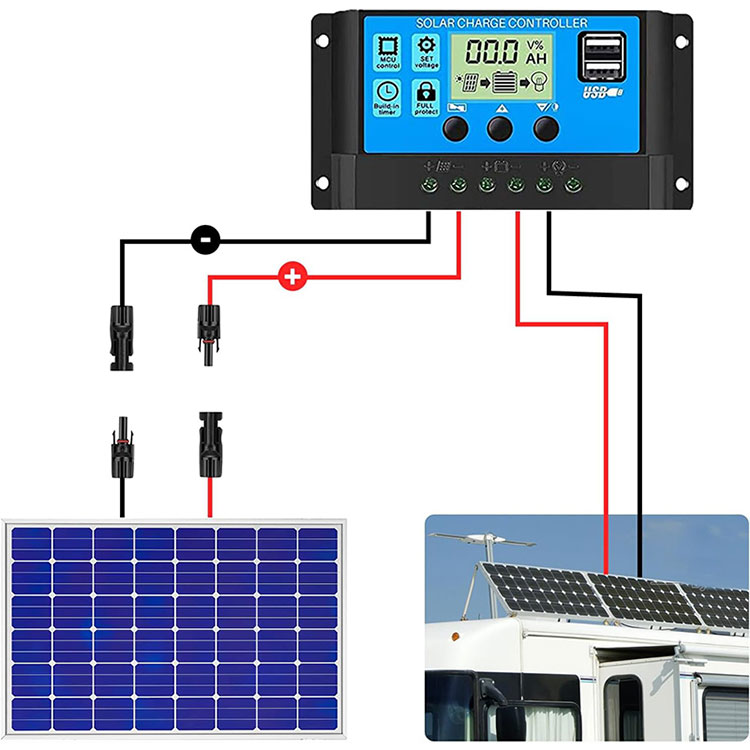
Heavy-Duty Mechanical Protection for Harsh Terrain
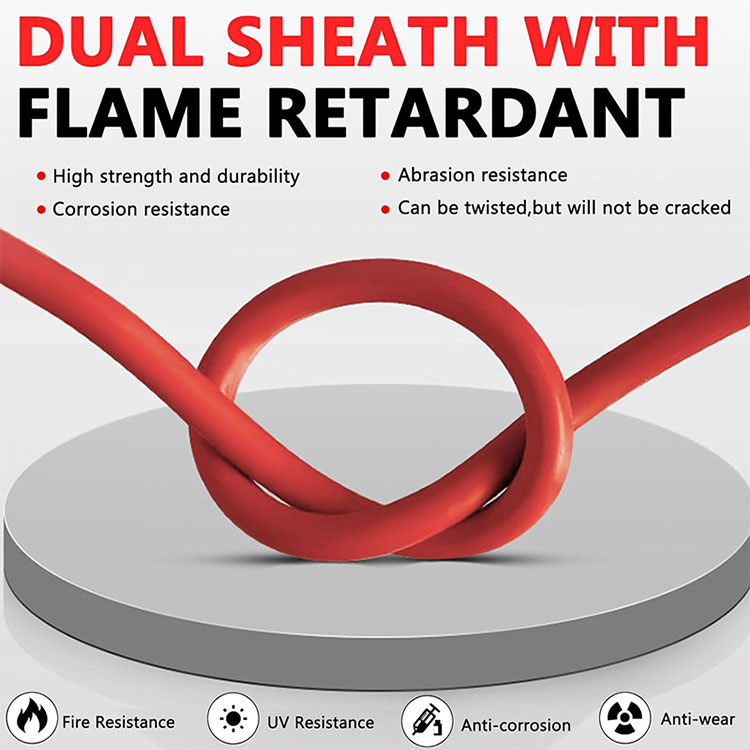
The cable is engineered with a reinforced outer jacket designed for mechanical abuse resistance. In ground-mounted solar farms, cables are often routed along sharp aluminum rails or buried in shallow trenches where mechanical wear is unavoidable.
In real-world application, the 50 Feet 10AWG Extension Cord demonstrates:
- High abrasion resistance against steel structure edges
- Anti-cracking performance under repeated bending stress
- Structural integrity under wind-driven vibration
- Improved tensile strength during installation pulling force
The Extension Cord for Ground Mounted PV System reduces field failure rates caused by jacket micro-cracks, which are a common issue in low-grade PV extension cables used in utility-scale projects.
Extreme Climate Adaptability in Open Solar Fields
Ground-mounted solar farms often operate in environments with extreme temperature fluctuations between day and night cycles. The insulation system of this cable is engineered to remain stable under such stress conditions.
Performance characteristics include:
- Operating temperature range: -40°C to +90°C
- UV-stabilized outer sheath for long-term sunlight exposure
- Moisture-resistant structure for rain and soil humidity
- Cold-weather flexibility without insulation stiffening
The 50 Feet 10AWG Extension Cord for Ground Mounted PV System maintains stable electrical insulation even during prolonged exposure to desert heat or winter freezing conditions.
Electrical Stability and Loss Control in Utility PV Systems
In ground-mounted solar systems, voltage drop is a critical engineering concern due to long cable runs between arrays and combiner boxes. The conductor design of this product focuses on minimizing resistance and improving system efficiency.
Core electrical features:
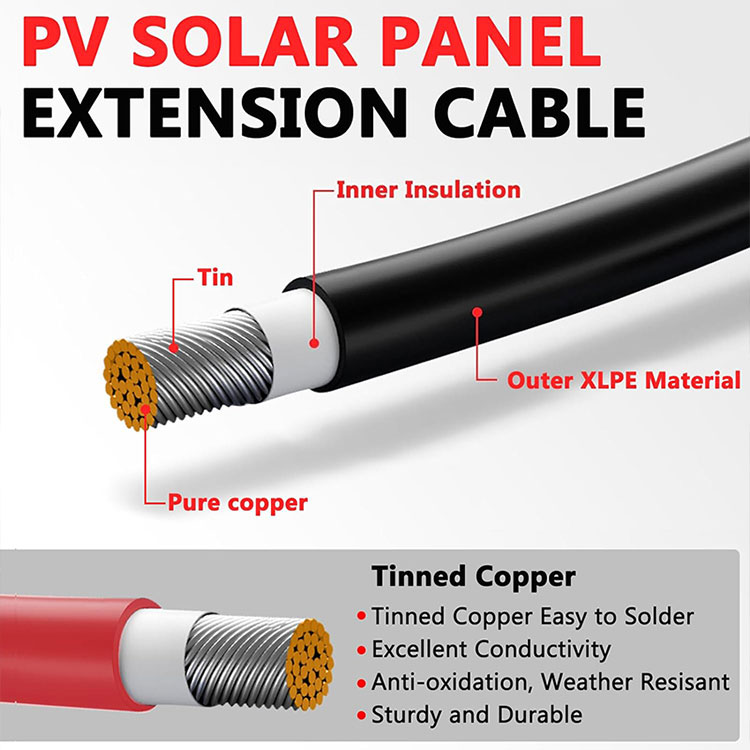
- Tinned copper conductor for oxidation resistance
- 10AWG / 6mm² cross-sectional optimization
- Rated current up to 57A
- High-voltage test capability up to 6500V
- Low conductor resistance (≤5.09Ω/km at 20°C)
The Extension Cord ensures consistent energy delivery across distributed solar field layouts, reducing cumulative power loss in large-scale installations.
Engineering Material Structure
| Component Layer | Material Specification | Function |
|---|---|---|
| Conductor | Tinned Copper | Anti-corrosion & conductivity stability |
| Insulation | PPO / Flame-retardant polymer | Thermal & UV protection |
| Outer Jacket | Reinforced PV-grade sheath | Abrasion & mechanical resistance |
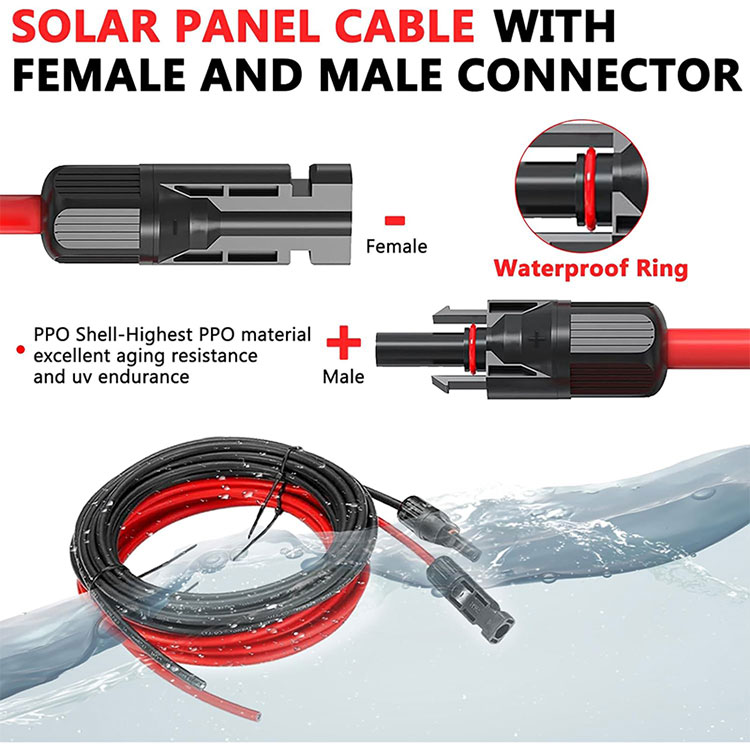
| Connector System | MC4-compatible locking type | IP68 sealed connection |
| Protection Level | IP68 | Waterproof & dustproof sealing |
This layered structure ensures the 50 Feet 10AWG Extension Cord performs reliably in continuous outdoor operation without degradation in electrical or mechanical performance.
Paidu Manufacturing Strength Behind Field Reliability
Paidu Group Limited operates a vertically integrated cable manufacturing base with:
- 18,000㎡ production facility
- 150+ skilled workers and technicians
- 30+ automated production lines
- ISO9001, CE, CCC, and TUV certification systems
- Advanced partial discharge testing hall for high-voltage validation
Each batch of the 50 Feet 10AWG Extension Cord for Ground Mounted PV System is processed under strict quality control procedures including conductor resistance testing, insulation withstand voltage verification, and environmental stress simulation.
Why Ground-Mounted Systems Prefer Standardized Extension Cords
Ground-mounted PV projects prioritize predictability, scalability, and maintenance efficiency. The standardized design of this cable helps achieve:
- Faster EPC project completion cycles
- Reduced electrical fault points across arrays
- Simplified inventory management for distributors
- Lower lifecycle maintenance costs
The Extension Cord for Ground Mounted PV System is engineered as a repeatable modular unit for large PV field deployment rather than a custom-assembled wiring solution.
Supply Chain Advantage and Cost Optimization
From a procurement perspective, Paidu’s factory-direct model supports:
- Stable bulk production capacity for large orders
- OEM branding for distributors and solar brands
- Ready-to-ship standardized lengths (including 50Ft format)
- Export-compliant packaging and documentation
The 50 Feet 10AWG Extension Cord enables buyers to reduce hidden costs associated with on-site assembly errors, rework, and conduit overuse.
In utility-scale solar environments, reliability is determined by mechanical durability and electrical stability under continuous stress. The 50 Feet 10AWG Extension Cord for Ground Mounted PV System integrates both requirements into a standardized, factory-controlled product designed for long-term deployment in harsh open-field conditions.
For EPC contractors, distributors, and solar project integrators, this solution delivers consistent performance, reduced installation complexity, and improved system-level energy efficiency across large ground-mounted PV arrays.
Hot Tags: 50 Feet 10AWG Extension Cord for Ground Mounted PV System, China, Manufacturer, Supplier, High Quality, Factory, Wholesale
Send Inquiry
Please feel free to fill your inquiry in the form below. We will reply you in 24 hours.





X
We use cookies to offer you a better browsing experience, analyze site traffic and personalize content. By using this site, you agree to our use of cookies.
Privacy Policy